The Packed Weekend Plan Is Not the Same as a Good One
A packed weekend plan can turn leisure into a chain of deadlines. Learn how to sort commitments, reduce coordination, and make the day easier to change.
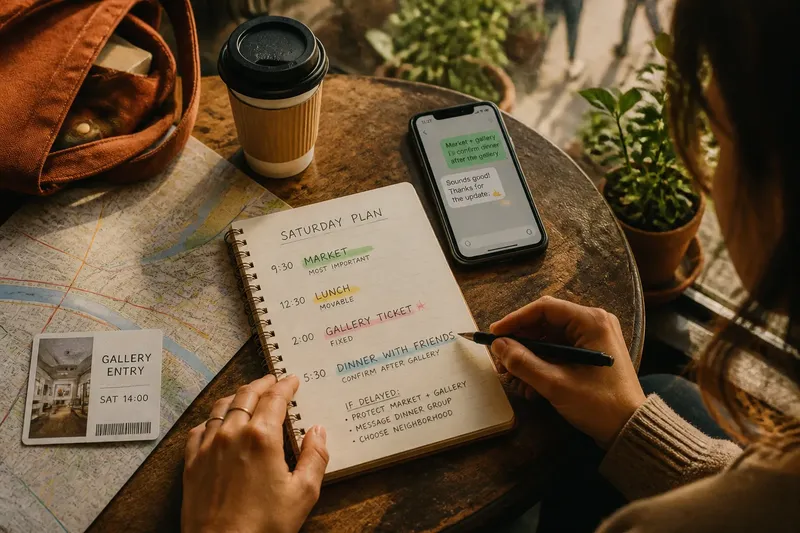
At 9:12 on Saturday morning, your train is pulling away while you search for the ticket you bought for the afternoon. There is a market before lunch, a museum slot after it, and dinner across town; the coffee you meant to drink slowly has become a takeaway lid in your hand. A packed weekend plan can look tidy on a screen and feel like unpaid dispatch work by midday.
The problem is not simply a lack of spare time. A crowded schedule makes small decisions harder: which booking matters, who needs an update, and what can change without creating a fresh round of messages. The useful fix is to make the plan easier to operate, not merely to remove an activity and admire the resulting blank space.
What makes a packed weekend plan hard to manage?
Every commitment adds more than its own duration. It can bring a ticket to find, a route to check, a companion to coordinate with, and a next location that assumes the previous one will end on cue. A day can be busy even when each individual activity sounds pleasant.
Plans also become brittle when they have no clear priority. If a market, gallery, lunch, and dinner all seem equally fixed, a delay forces you to renegotiate the whole day. Decide which commitment is the reason you made the plan, and which ones are simply attached to it.
Write down the day’s fixed commitments and the people affected by each one. That list shows where a change needs communication, not just a calendar edit.
How can you make the schedule easier to change?
Give each activity a status rather than treating every entry as a promise. Mark something as fixed if it has a timed ticket or involves another person relying on you; mark it movable if its time can shift; mark it optional if leaving it out would not spoil the day.
Then check the handoffs: how you will get from one place to another, where you can eat, and what happens if the first activity runs long. The point is not to predict every delay. It is to know which decision you will make when the schedule stops matching the clock.
Say you have a market visit, a timed gallery entry, and dinner with friends across town. Imagine the gallery ticket is fixed, the market is the outing you care about most, and the dinner group can choose its neighborhood later. You keep the market and gallery, send the group a message that you will confirm dinner after the gallery, and use the actual end time to decide whether to travel across town or suggest a nearby meal; the observable result is that one delay changes the dinner location rather than triggering a scramble to preserve every original detail.
What should you check before keeping every booking?
Use this review to make a decision about each part of the day, rather than adding another layer of planning:
- Check whether the booking has a fixed entry time; if it does, keep it and plan around its start, but if it does not, move it to a less crowded part of the day.
- Check whether another person is relying on your arrival; if they are, tell them your realistic window and keep the commitment, but if they are not, treat the activity as movable.
- Check whether the route requires crossing town between activities; if it does, remove or relocate one nearby commitment, but if it does not, keep the simpler route.
- Check whether food has a place in the schedule; if it does not, leave a meal decision open near the activity, but if it does, avoid adding another timed stop around it.
- Check whether the day still works if the first activity runs long; if it does not, move the next flexible booking or alert the people involved, but if it does, keep the current sequence.
- Check whether you can name the one activity you most want; if you can, protect that one and reconsider the rest, but if you cannot, choose the easiest commitment to change and decide again after the first outing.
Make edits in one shared place, such as a group text or a phone note, so nobody is working from an older version. A plan that depends on everyone remembering a separate verbal update is less a plan than a memory exercise.
How do you coordinate changes without a message storm?
Group plans often grow by polite increments. Someone suggests coffee, another person adds a shop, and a third proposes a meal that requires crossing town. Each addition looks minor until one person has to reconcile the full route.
State the boundary and the next decision plainly: “I can join the market and gallery; I’ll confirm dinner after the gallery.” If a ticket or reservation may be affected, check its change terms and tell the relevant people before they set out.
For a plan involving several friends, name one person to send the current version of the time and place. Keep the update short enough that people can find the useful detail without scrolling past a committee transcript.
What if the day no longer fits the plan?
Use a simple order of operations: protect fixed commitments, tell affected people about changes, then drop or move the least important flexible item. If the delay affects a reservation, contact the venue or group rather than assuming the original arrangement still works.
Imagine your train is delayed before a market visit and you now have less time before a timed gallery entry. You message your companion that you will meet them at the gallery instead of the market, keep the ticket, and cancel the optional coffee; the resulting decision is clear, and nobody is left waiting at a location you can no longer reach.
When you revise a packed weekend plan, change the part that creates the most coordination rather than trying to preserve every detail. A small, early update is usually easier for everyone than a late explanation delivered while walking toward the wrong station.
Which weekend-planning questions come up most often?
How many activities should I schedule in one day?
There is no useful universal count because a timed ticket, a long visit, and a short neighborhood stop place different demands on the day. Check the travel and handoffs between them, then keep only the combination that still works if one activity takes longer than expected.
Should I book every part of a weekend in advance?
Book the activities that require a reservation or fixed entry, and avoid turning optional stops into obligations simply because they can be booked. Before confirming another booking, check what it depends on and who would need to know if it changes.
How do I tell friends that I may change the plan?
Name what you can commit to and when you will make the next decision, such as confirming a meal location after a gallery visit. People can plan around a clear limit more easily than around a vague promise to see how the day goes.
What should I do if I am already running late?
Check which commitment has a fixed start, which person is waiting, and whether a reservation needs an update. Keep the fixed item if you can reach it, and tell people promptly if you need to move or drop something else.
A weekend is easier to enjoy when its practical details do not demand constant repair. Before you leave home, make sure you can find the ticket, name the next fixed commitment, and tell the people involved what might change; that small bit of housekeeping can save the afternoon from becoming a group chat with shoes on.